
Skip to content

What does Use Class EN 16755 EXT mean?

Accelerated weathering
When working with fire-retardant treated wood, the concept of use class is an essential part of the product's documented performance. The use class defines the service conditions under which the durability of the fire performance has been verified and documented—for example, for exterior environments or for interior environments with high humidity and limited ventilation, such as attics or indoor swimming pool facilities.

Achieving a specific fire classification—such as Euroclass B-s1,d0 or an approved façade system according to SP Fire 105—demonstrates how the material performs in a fire at the time of testing. However, this does not automatically mean that its fire performance has been verified for long-term use in the intended service environment.

To assess the durability of the fire protection, dedicated accelerated weathering test methods are used. For exterior products, EN 16755 is the established European test standard. Under this standard, the material is subjected to repeated cycles of water exposure, UV radiation, and temperature variations before its fire performance is tested again. The purpose is to verify that the fire performance is maintained after simulated weathering.

It is important to note that the standard does not specify a service life expressed in years under natural outdoor exposure. Instead, it distinguishes between two separate characteristics: Fire classification – describes how the material reacts when exposed to fire. Use class – describes the service conditions under which the durability of the fire performance has been verified and documented.

Only when both the fire performance and its verified durability for the intended service environment are documented is there a reliable basis for assessing a product's suitability for a construction project.
wstp-cederhusen 1920

Reassurance with using fire-protected wood with utility class

  • 1Approval by a Notified Body – Type Approval Certificate
    Choosing a type-approved fire-retardant treated wood product with a verified use class for exterior applications means that the product has undergone extensive testing and technical evaluation by independent, accredited testing laboratories. The results form the basis of the Type Approval issued by a Notified Body. As part of the verification process, factors such as fire retardant retention, hygroscopicity, leaching behaviour, and fire performance before and after accelerated weathering are evaluated in accordance with relevant test standards, with EN 16755 serving as the European method for verifying the durability of fire performance after artificial weathering for exterior applications.
    The resulting documentation provides verified evidence of how the fire protection performance has been assessed for the intended service environment, as well as the conditions under which the product's classification and approval remain valid. This provides confidence for developers, specifiers, contractors, and regulatory authorities by demonstrating that the fire performance has not only been tested in its original condition, but has also been verified following relevant accelerated weathering tests.
  • 2The use class determines whether a fire-retardant treated wood product has been verified for its intended application
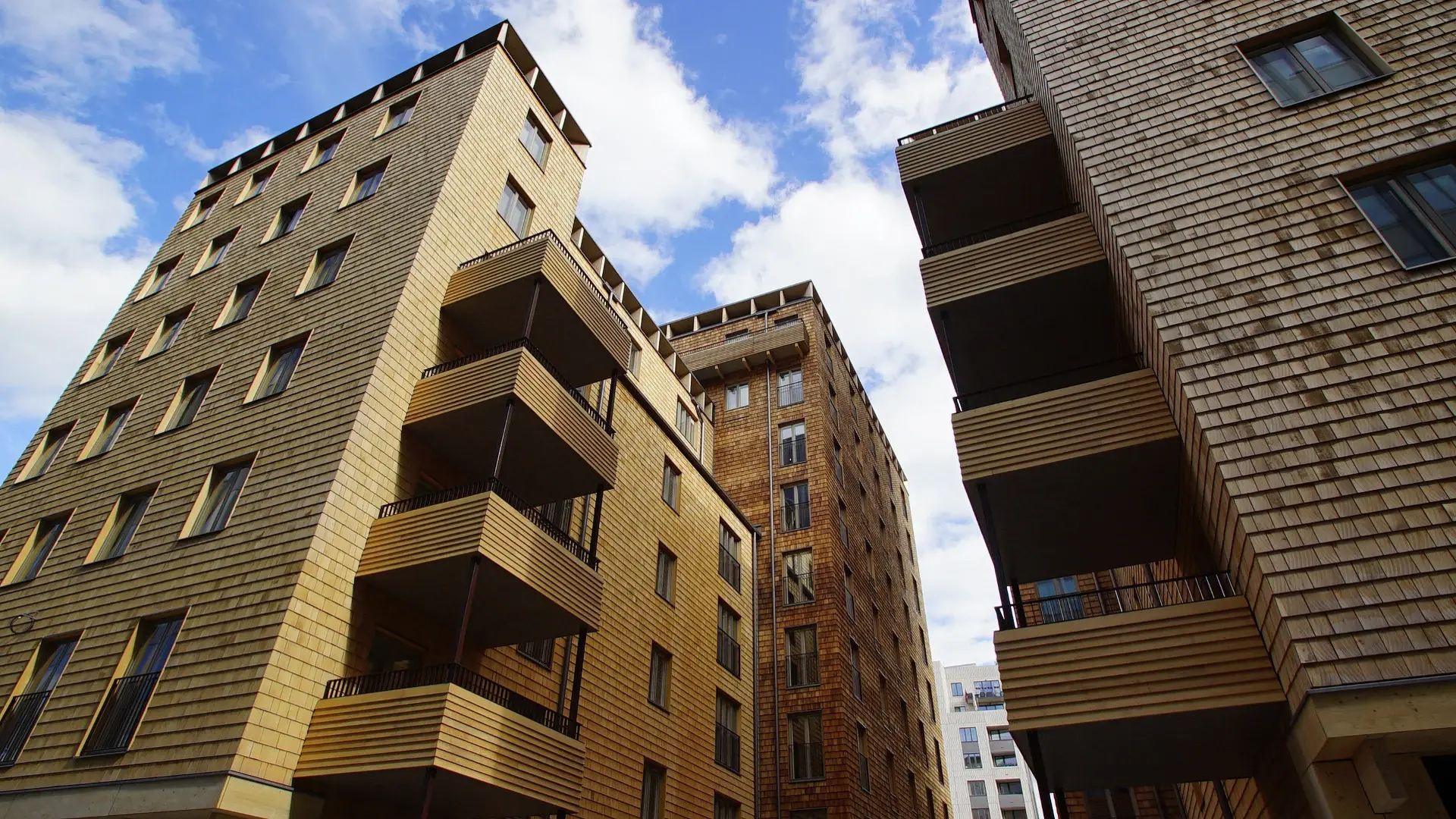
    When wood is used in façade applications, it is essential that its fire performance has been verified for the intended service conditions. By choosing Woodsafe fire-retardant treated wood with a documented use class for exterior applications, verified through testing in accordance with EN 16755, you obtain documented evidence demonstrating that the fire performance has been evaluated both before and after artificial weathering in accordance with the European test standard. This means that the product's fire performance has been verified for use in exterior environments under the conditions and service requirements specified in its classification and supporting documentation.
    EN 16755 verifies that the fire performance is maintained after accelerated weathering, but it does not define a service life expressed in years under natural exposure. Through a deep-penetrating fire-retardant treatment integrated into the wood's cellular structure, Woodsafe enables robust façade solutions in which the fire protection is not dependent on a surface-applied fire-retardant coating. This provides specifiers and developers with documented evidence supporting the design of durable timber façades with verified fire performance.
  • 3New industry guidelines – confidence for people and long-term investments
    Choosing type-approved timber façade systems with a documented use class for the intended application provides a clear and reliable basis for decision-making regarding both fire safety and long-term performance. For developers, building owners, specifiers, and occupants alike, this offers greater confidence that the solution has been tested, evaluated, and assessed by independent, accredited bodies in accordance with applicable regulations and relevant standards. When both the fire classification and the use class have been verified, documented evidence is available demonstrating how the product performs in the event of fire and under which service conditions its fire performance has been verified.
    This provides a stronger foundation for specification, clearer compliance with applicable regulations, and more reliable decision-making throughout the entire construction process. The result is timber façade solutions with verified performance, long-term functionality, and documented durability—providing a sound investment for people, buildings, and their long-term management.

A comprehensive assessment – more than a single fire test

To obtain a Type Approval, it is not sufficient for a product to achieve a specific fire classification, for example through façade system testing according to SP Fire 105 or classification in accordance with EN 13501-1. For products intended for exterior use, the durability of the fire performance must also be verified using relevant test methods, with EN 16755 serving as the European standard for artificial weathering and verification of maintained fire performance.

Depending on the intended application, fire-retardant treated wood may be documented for different use classes:

  • INT1 – normal interior environments.
  • INT2 – interior environments with elevated humidity or limited ventilation.
  • EXT – exterior environments where the durability of the fire performance is verified through testing in accordance with EN 16755.

By choosing Woodsafe® PRO™ or Woodsafe® WFX™ with a documented fire classification and a verified use class, you obtain technical documentation demonstrating that the product has been assessed for its intended service environment within the scope of its Type Approval and supporting documentation.

This provides specifiers, developers, and building owners with a more reliable basis for design, regulatory compliance, and long-term asset management than solutions based solely on individual fire tests without documented durability or independent system assessment.

Choosing Type Approved fire-retardant treated wood with a documented use class is therefore about more than simply complying with regulatory requirements. It means selecting a solution whose fire performance, durability, and intended application have been verified through a comprehensive technical assessment.