
Skip to content

Building Materials Supplier

Here you'll find useful information for Building Materials Suppliers in various fields. Click the buttons below to learn more.

Documentation That Stands the Test of Time—From Shelf to Construction Project

Proper Documentation – A Simple Checklist for the Construction Industry.

As a player in the construction trade, you are often the first link in the chain. That is why it is important to ensure, right from the start of purchasing and sales, that fire-retardant wood has the correct documentation. According to the EU Construction Products Regulation (CPR 305/2011), fire-retardant wood must always bear the CE marking and a Declaration of Performance (DoP). These are basic requirements.

The CE marking indicates that the product is declared in accordance with the applicable standard—but it does not specify whether the product is suitable for all uses. For the product to be used safely in a construction project, more than just the CE marking and DoP is often required. This is where type approvals come into play. They show that the product has been tested, verified, and approved for actual use, for example:

  • the correct service class for outdoor environments (EN 16755 EXT)
  • the correct class for interior fire protection (K210/K110)
  • verified facade safety through SP Fire 105
For those of you in the construction trade, this means something very concrete: you can sell products where the documentation is comprehensive, clear, and accepted by both consultants and authorities—without the customer having to supplement it later.

Type approvals are in line with the Swedish National Board of Housing, Building, and Planning’s Building Regulations (BBR) and the Planning and Building Act (SFS 2010:900). This reduces the risk of questions, delays, or rejections later in the project.

In short:
Having the right documentation from the start makes it easier for your customers to build correctly—and strengthens your role as a reliable, knowledgeable, and professional supplier.


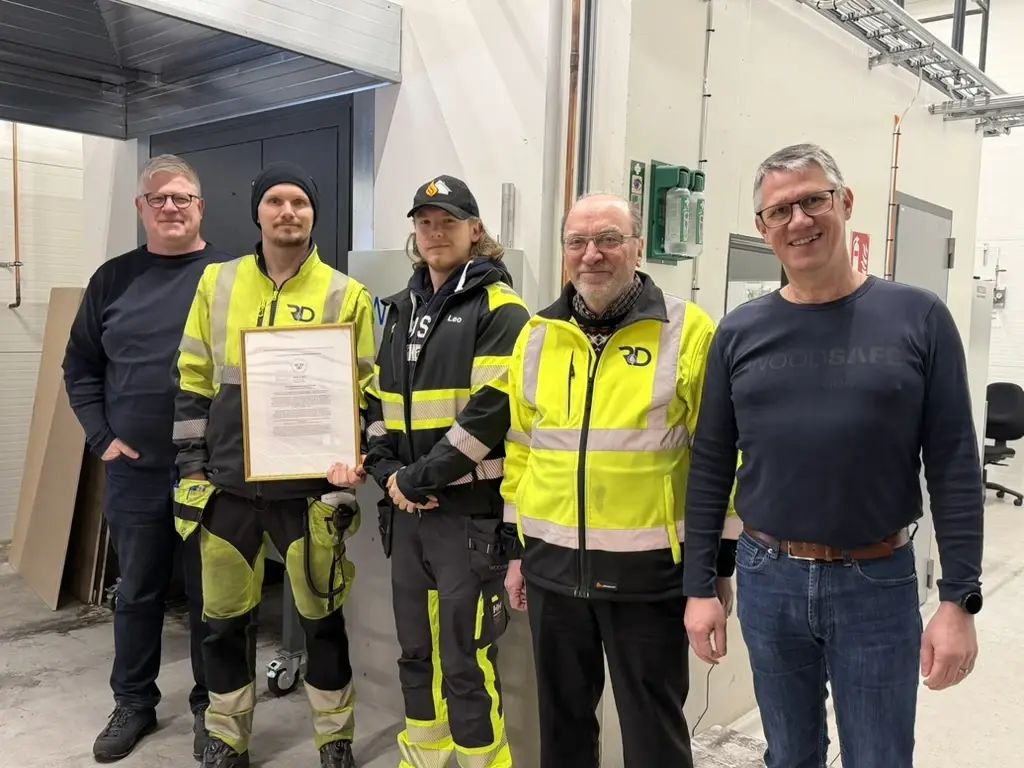
Woodsafe_Kiruna_94

Valid Documentation vs. Questionable Claims

It is crucial to understand the difference between documentation issued by a notified body and documents produced by the manufacturer itself or an external consultant. Only certification documents from a notified body have legal validity.

A technical report, a “statement,” or an opinion from a consultant can be valuable as information, but it can never replace an official certificate or a classification report. If the documentation is not issued through an accredited process and subject to ongoing monitoring, it lacks validity during audits, procurement, and interactions with regulatory authorities.


Checklist: Correct and Incorrect Documentation

Correct
  • CE certificates and DoPs issued in accordance with CPR 305/2011.
  • Type Approval Certificate in accordance with SP Fire 105, EN 16755 EXT, and K requirements.
  • Documentation from a notified body (e.g., RISE, NTI, UL, WPA).
  • Certificate subject to ongoing third-party verification.
Error
  • "Certificates" issued by the manufacturer itself.
  • Consulting opinions not affiliated with a notified body.
  • Brochures or marketing materials that lack test references.
  • Report data from small-scale tests presented as evidence of performance.