
Skip to content

Consultant

Here you'll find useful information for consultants in various fields. Click the buttons below to learn more.

Exterior Cladding and Fire Safety Verification

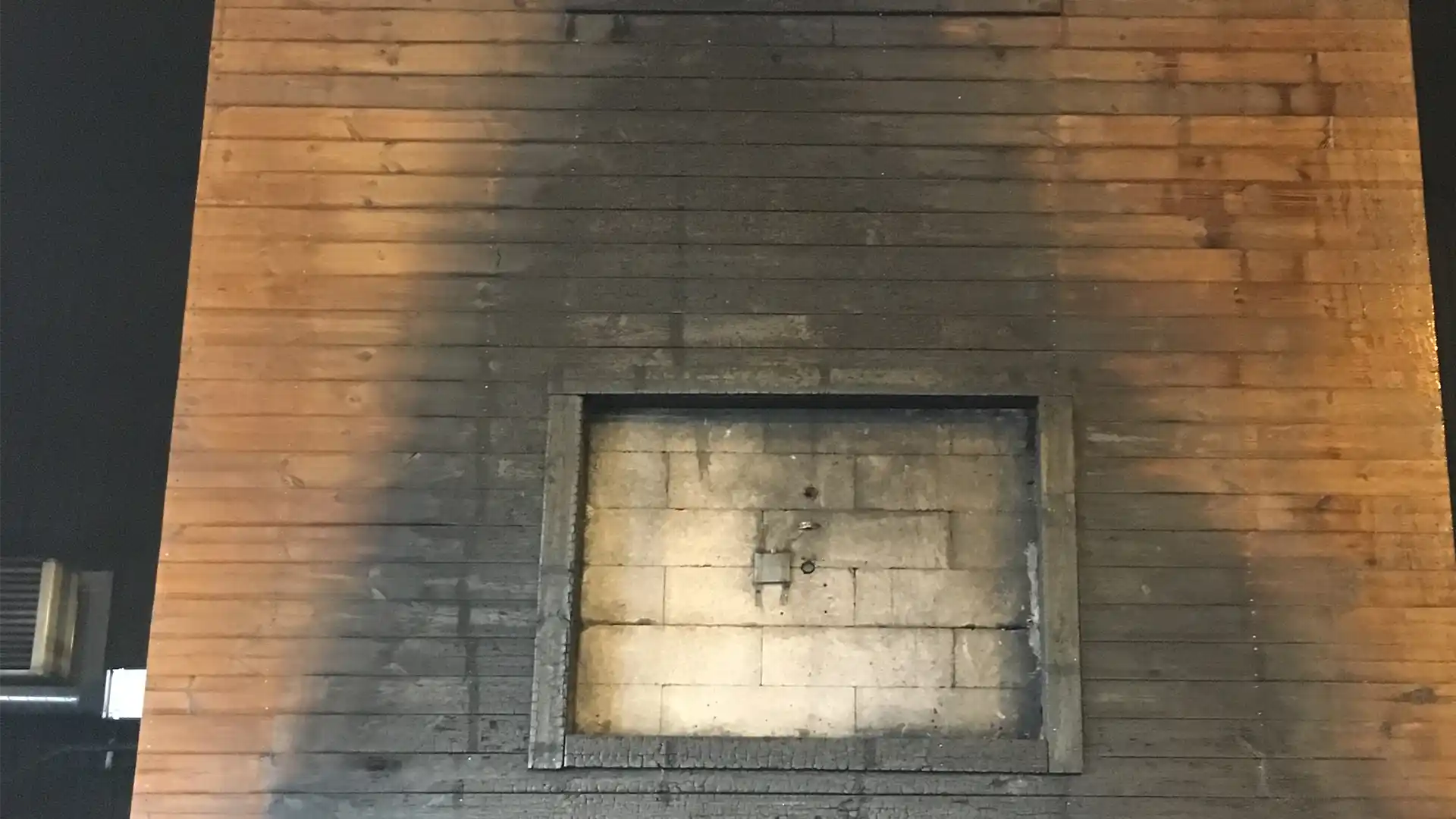
For facade cladding and composite facade systems in Sweden, SP Fire 105 is the only accepted method for verifying fire safety on a full-scale basis. The method is designed to assess how a complete facade structure behaves during an actual fire, including fire spread along the facade, the impact of fire on the underlying structure, and the risk of fire jumping between floors. Small-scale tests, such as the cone calorimeter or SBI, can provide valuable information about material properties and fire behavior at the component level.

However, these tests cannot be used to draw conclusions about the performance of an entire facade system during a fire, as they do not account for the interaction between materials, installation, and construction. For consultants, this means that documentation from a full-scale SP Fire 105 test must always be available when verifying facade requirements. Without such a test, there is no legally sound evidence that the facade solution meets applicable fire safety requirements.

In Europe, Euroclass is widely used as a requirement for facade cladding. Contact support@woodsafe.com if you would like to discuss the requirements.
SPF105_1
What Is Measured Test specimen Assessment Usage Atomic Table 01
Fire class according to 13501-1 (EN 13823) FIGRA, THR, LFS, TSP, SMOGRA—Basis for Euroclass (A–F) Part of a product (W: 1.5 x 0.5 m, H: 1.5 m) Evaluates materials in an idealized wall arrangement, not entire facades or actual buildings Euroclass according to EN 13501-1
SP Fire 105 Fire spread along the facade surface, within the structure, heat radiation through windows, falling debris, temperature at the eaves, and charring of the lower part of the upper windows Full-scale facade structure (6x4 m) Realistic facade construction (paneling, insulation, fasteners, air gap, substrate) Br1 buildings in accordance with the Swedish National Board of Housing, Building and Planning’s regulations and general guidelines, as well as new industry standards

The Structure as a Whole

A facade is a system in which the panel, mounting conditions, insulation, substrate, and fasteners work together. Woodsafe has been covered by the SP Fire 105 Type Approval Certificate since 2008 and offers the market’s broadest portfolio of type-approved wood facade systems: spruce, Thermowood, CLT, cedar, cedar shingles, and Accoya.

For consultants, this means the solution is backed by documented full-scale testing—not just material testing.

What Is Measured Level Restriction Usage
Cone calorimeter (ISO 5660-1) Heat Release Rate (HRR), Smoke Development, Ignition Time, Mass Loss Material sample (100x100 mm) Just small pieces of material; they say nothing about the system or design Research, Materials Services
13823 FIGRA, THR, LFS, SMOGRA - the basis for Euroclass (A-F) Part of a product (approx. 1.5 m panel) Evaluates materials in an idealized wall arrangement, not entire facades or actual buildings Euroclass according to EN 13501-1
SP Fire 105 Spread along the facade, through fire windows, low intensity, falling debris, impact on the structure Full-scale facade (approx. 4x6 m) Realistic testing of the complete system (panel, insulation, fasteners, air gap) Euroclass according to EN 13501-1

Painted Facade vs. Impregnated Facade

A facade is a long-term investment in which safety, functionality, and durability must be ensured. The difference between a fire-retardant painted facade and an impregnated facade is therefore crucial.

Fire-retardant coating is a surface treatment that sits only on the surface of the wood. It requires proper application, documented film thickness, regular inspection, and periodic maintenance to remain effective. In practice, this poses a risk—both technical and legal—since even a minor deviation in application or a failure to maintain the coating can compromise the safety of the entire structure.

Impregnation, on the other hand, is a treatment that penetrates the wood, binding the fire-retardant agent into the material. This makes the system resistant to weather, moisture, and wear and tear, without its performance deteriorating over time. Woodsafe systems are type-approved for a range of wood species, insulation materials, air gaps, and stains, providing consultants with a robust and maintenance-free system with documented performance.

Six key differences between fire-retardant paint and impregnation:

  • 1Depth of Treatment 
    Painting remains only on the surface, whereas impregnation penetrates throughout the entire wood
  • 2Quality Control 
    Painting depends on the contractor’s application; impregnation takes place in a controlled and certified industrial process
  • 3Maintenance  
    Painting requires periodic inspections and repainting; impregnation is permanent
  • 4Weather Resistance 
    Paint is degraded by UV rays, moisture, and mechanical wear; the impregnation is not affected
  • 5System Documentation 
    Impregnated systems are type-approved in full-scale SP Fire 105 tests; painted systems often lack this level of verification
  • 6Legal Sustainability 
    Certified impregnation and FoA are valid documentation for project planning; painted solutions risk being questioned during inspections or in the event of damage

Woodsafe's Perspective on the Facade Requirement

Facade requirements are among the most critical safety requirements in construction projects—it’s not just about classifications on paper, but about how an entire facade behaves in a real fire. Euroclass or small-scale tests can never, on their own, verify a facade’s fire safety, since they only measure material properties in controlled laboratory environments. The only full-scale, nationally accepted proof of performance is SP Fire 105, in which the entire structure is tested under realistic conditions.

Since 2008, Woodsafe has been part of type-approved SP Fire 105 systems and today offers the market’s broadest portfolio of wood-based facade solutions—from spruce and Thermowood to cedar, Accoya, and CLT. For consultants, this means that our system documentation, certificates, and type approvals are not only technically sound but also legally valid supporting documents for design, procurement, and dialogue with regulatory authorities.

With Woodsafe, as a consultant, you get more than just a product—you get comprehensive, verified system support that ensures facade requirements are met in practice, not just in theory