
Skip to content

Consultant

Here you'll find useful information for consultants in various fields. Click the buttons below to learn more.

Use class according to EN 16755 – crucial for long-term performance

The use class is crucial for fire-retardant wood to perform properly in the right environment over time. The EN 16755 standard defines three use classes—INT1, INT2, and EXT—ranging from dry indoor environments to fully exposed outdoor environments. The basic principle is clear: it is the fire-retardant’s durability that must be verified for the environment in which the product is used. The type of wood serves solely as a substrate and has no decisive influence on the long-term performance or durability of the fire protection.

There are two paths to EXT classification:

  1. Without surface treatment—the fire retardant is inherently durable enough for outdoor environments without a protective surface coating.
  2. With surface treatment—the product achieves EXT only if the fire protection is protected by a specific paint or surface treatment system.
TW_pine

WFX™ & PRO™ - Documented, approved performance class EN 16755

Since 2008, Woodsafe has supplied type-approved fire-retardant wood in accordance with the standards in effect at the time regarding durability and use. The standard now known as EN 16755 represents a further development and formalization of these requirements, which Woodsafe’s products have met for a long time.

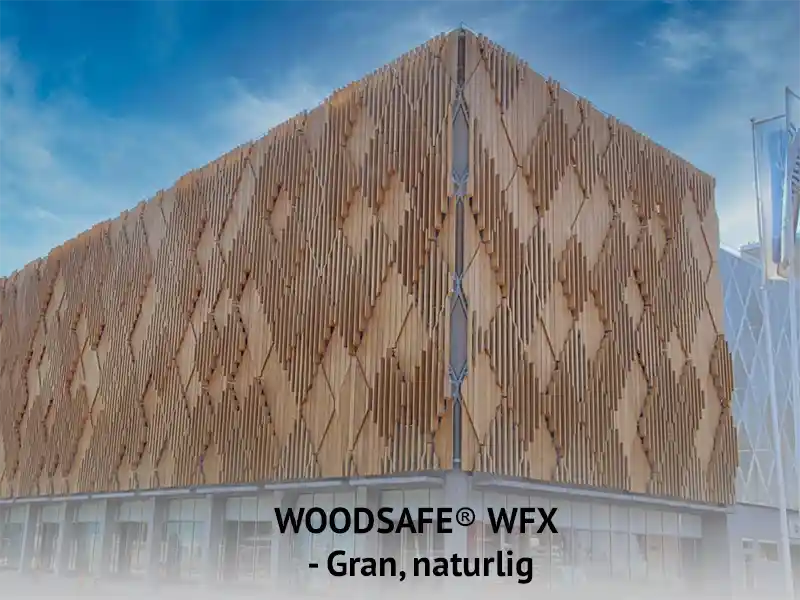
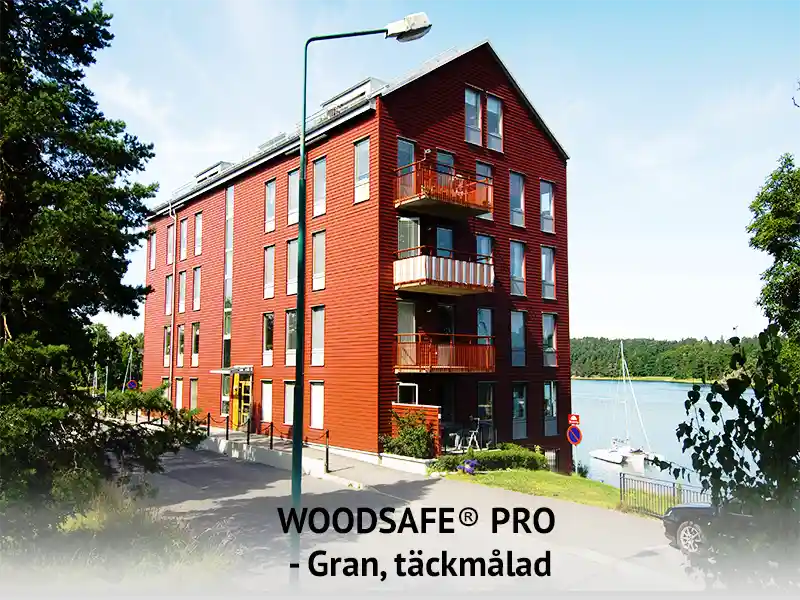
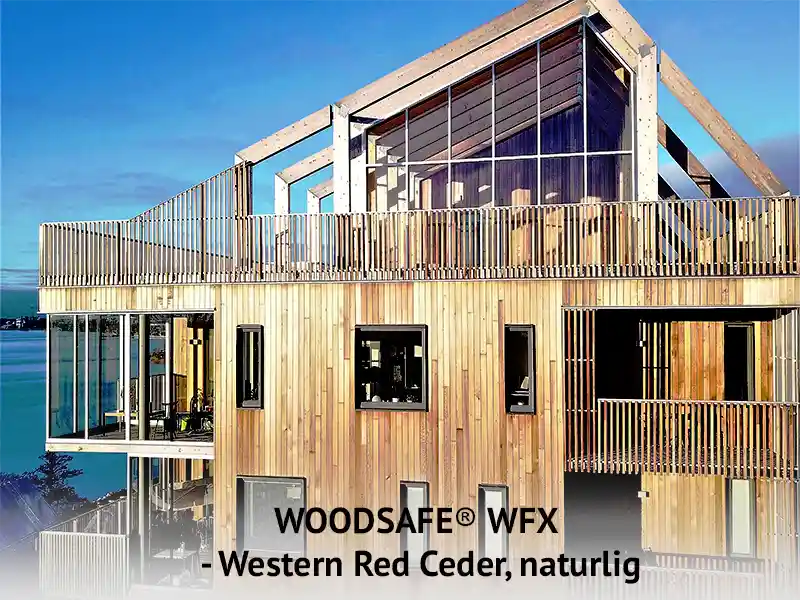
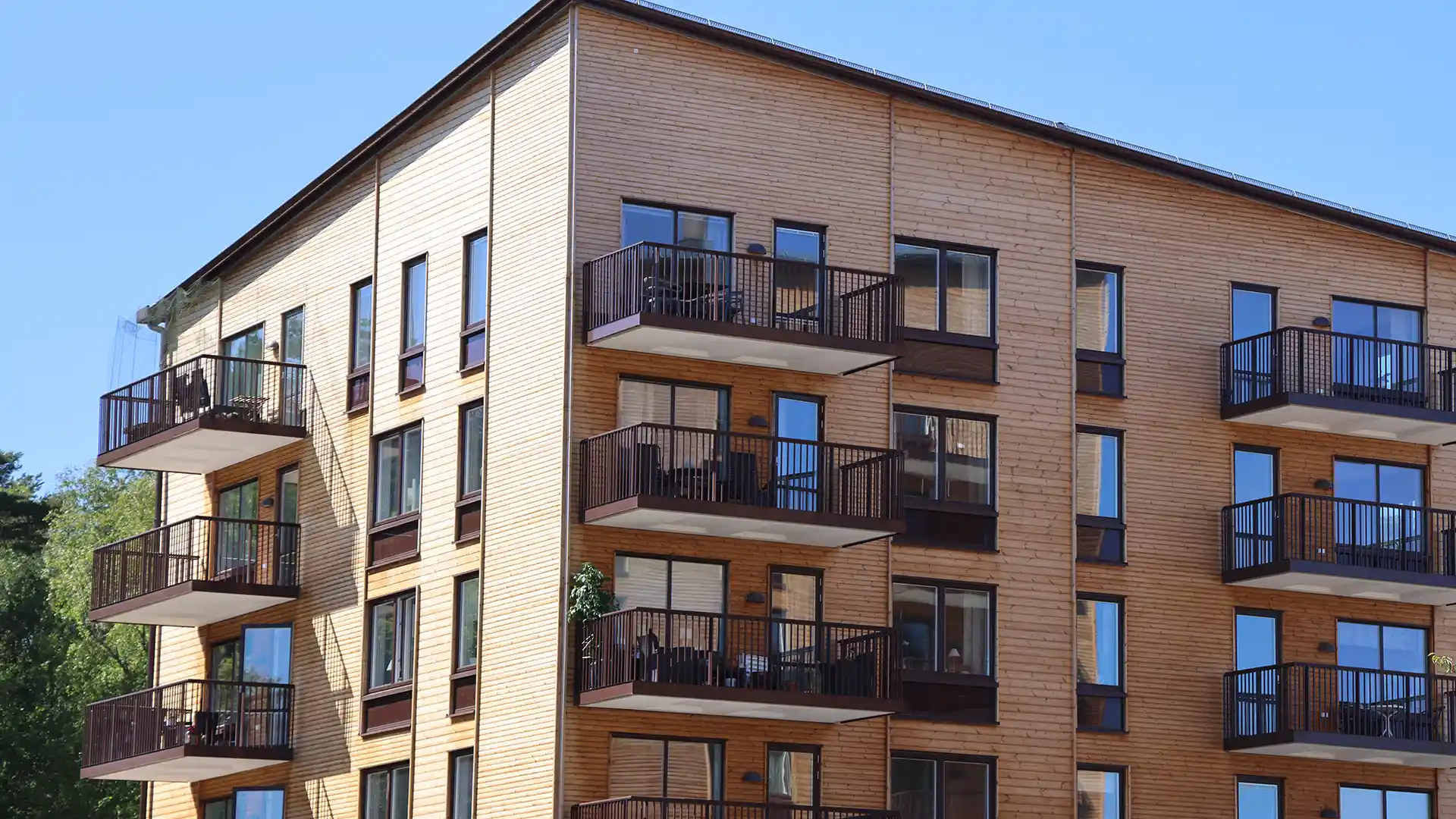
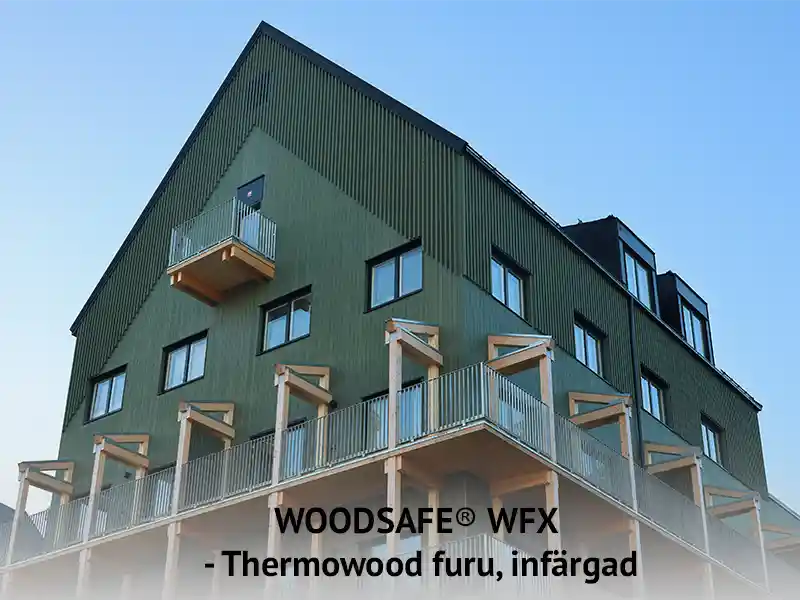
Both of Woodsafe’s main products are covered by the type approval. Woodsafe® PRO™ is intended for exterior use with a covering surface treatment, where the paint system is an integral part of the verified performance. Woodsafe® WFX™, on the other hand, is verified for exterior use without a surface treatment, which allows for natural aging in outdoor environments without compromising fire protection performance.

In addition to European verification, Woodsafe® WFX™ is also listed by UL in accordance with ASTM D2898, with extended testing per ASTM E84 (UL 723) (30 minutes), which represents a higher level of verification than the standard version. This provides further confirmation of the product’s long-term fire performance in demanding environments.

In summary, Woodsafe’s offering is based on extensive experience, verified durability, and proper application, with documentation tailored to both European and international regulations.


Performance Class – Testing and Limits of Application

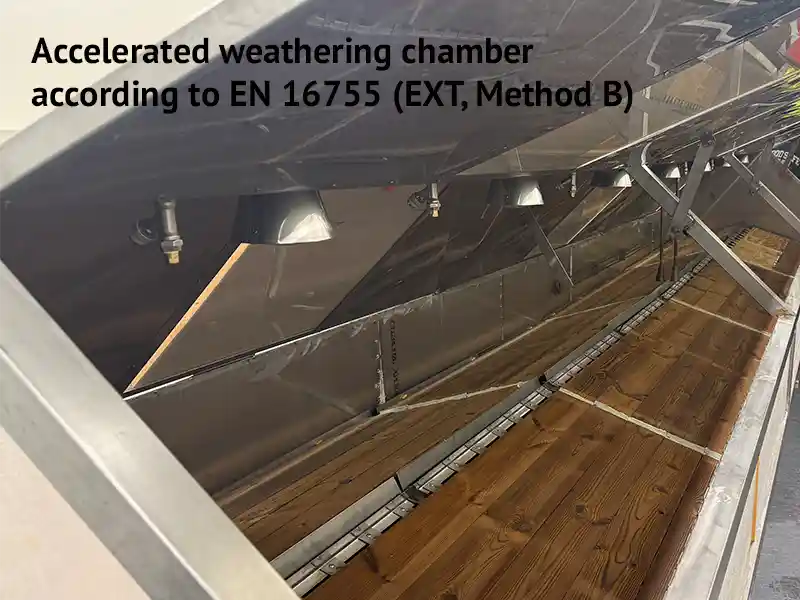
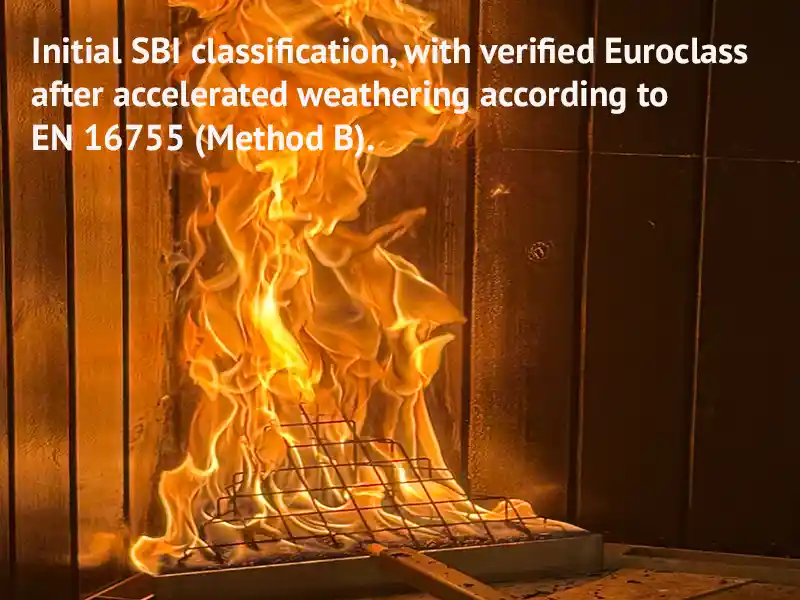
Durability of Fire Performance, often referred to as the service class, is regulated by the European standard EN 16755. The standard is designed to evaluate the durability of the fire protection product and its ability to maintain its declared fire class after defined climatic exposure, rather than to measure fire performance in its initial condition.

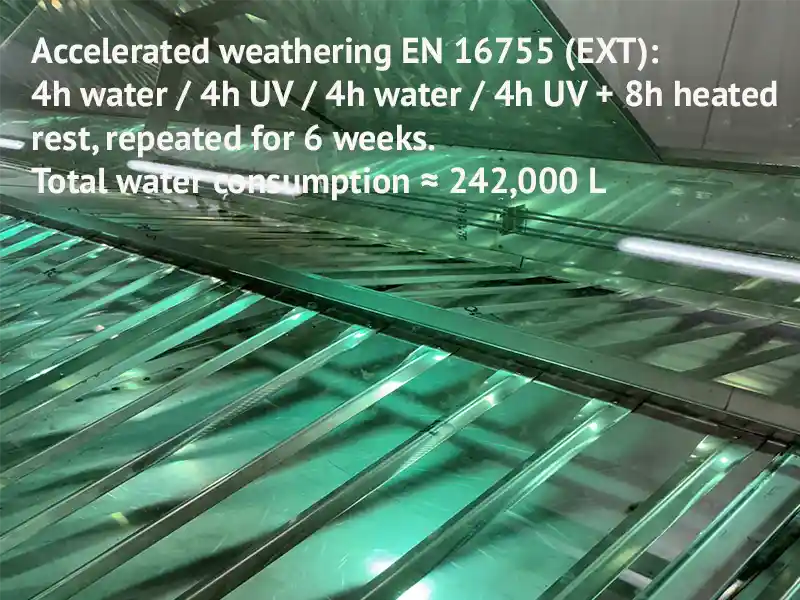
The purpose of EN 16755 is to ensure that the fire protection product functions effectively in the environment where it is installed, with a particular focus on the effects of moisture, precipitation, condensation, UV radiation, and heat. For outdoor applications, the product must meet service class EXT.

  • INT 1 - Applies to dry indoor environments with no risk of moisture exposure. The fire-retardant material is verified to maintain its fire performance under normal humidity levels and temperature fluctuations, without being affected by condensation or moisture.
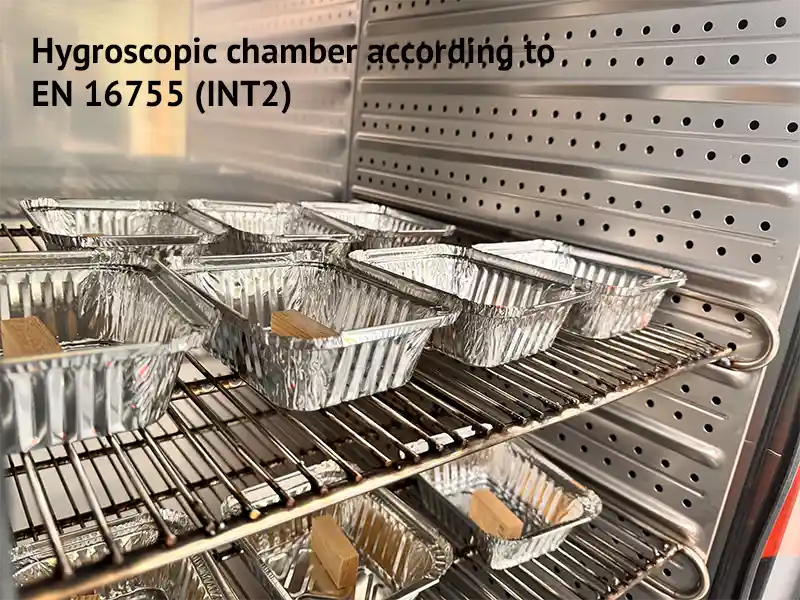
  • INT 2 - Temporary exposure to moisture in indoor environments with periodic moisture exposure, such as condensation or temporary wetting. The fire-retardant material is verified to maintain its fire performance despite limited and intermittent exposure to moisture.
  • EXT – Outdoor Exposure: Refers to fully exposed outdoor environments subject to prolonged exposure to precipitation, moisture, and climatic conditions. The fire-retardant material is verified to maintain its fire performance after defined climate exposure, with or without surface treatment depending on the system.
  • Compliance with EN 16755 EXT provides a reliable indication of how fire protection performs during prolonged exposure to rain, sunlight, temperature fluctuations, and moisture

Be aware of common pitfalls

When using fire-retardant wood, one of the most common and critical pitfalls is failing to ensure that the fire-retardant treatment is approved for the specific use class. It is not enough for a product to meet a certain fire class in tests conducted by an accredited testing laboratory—the fire resistance of the material in the environment where it will be used must be verified and formally approved. A single test result does not constitute approval for long-term use.

If the fire protection product lacks approval for the specific environment—for example, in outdoor settings or in areas exposed to moisture—there is a clear risk that the fire protection will deteriorate over time due to leaching or chemical degradation. The consequence may be that the declared fire performance is no longer valid in practice, even though initial testing was performed.

For consultants, this entails a clear responsibility: always ensure that the use class according to EN 16755 is verified through testing at an accredited testing laboratory and subsequently approved by a notified certification body for the specific application. Without such approval, the documentation lacks legal standing, which can have consequences during inspections, renovations, or in a legal context.

Summary:
“Tested at an accredited laboratory” is not the same as “approved use class”—without a verified and approved use class, there is no guaranteed fire performance in use.


  • Tested or Approved—The Difference Is Crucial
    Ensure that the product has been tested, verified, and certified in accordance with EN 16755 for the use class that corresponds to the specific application environment.
  • Who has approved what?
    Ensure that each approval is based on testing performed by an accredited testing laboratory for the relevant test method and application.
  • Is there a valid approval from a notified body?
    Ensure that the classification report comes from an accredited testing laboratory, and that the certificate and DoP are issued by a notified body specifying the intended use class.
  • Does this apply to painted or untreated panels?
    Ensure that the verified service class clearly specifies whether it applies to painted panels or naturally aged, untreated panels. This requirement is application-specific and critical to validity.
  • Has the system been tested in real-world projects?
    References show that the documentation works in practice.