
Contractor
Here you'll find useful information for builders and contractors in various fields. Click the buttons below to learn more.
The most common mistakes happen before installation begins
Many of the problems that arise on a construction site can be prevented even before the materials are delivered.
When fire-retardant wood is included in a construction project, most deviations do not occur during the actual installation, but earlier in the process. Unclear drawings, late material changes, or inadequate documentation can create uncertainty that persists all the way through the inspection and final approval.
For the contractor, it is therefore crucial to ensure early on that the ordered materials truly meet the project’s requirements. By verifying documentation, fire class, use class, and system compatibility before delivery, the risk of problems down the line is reduced.
A thorough inspection at the start of the project is often significantly less expensive than having to correct errors when the building is nearly complete.
Small changes can have major consequences
Even minor deviations can affect the documented solution.
During the construction phase, changes often occur for practical reasons. A type of wood may be substituted due to delivery times, a panel profile may be modified, or a design detail may be adjusted to simplify production.
Many of these changes are entirely reasonable from a structural engineering perspective, but they may also mean that the documentation on which the project is based is no longer valid.
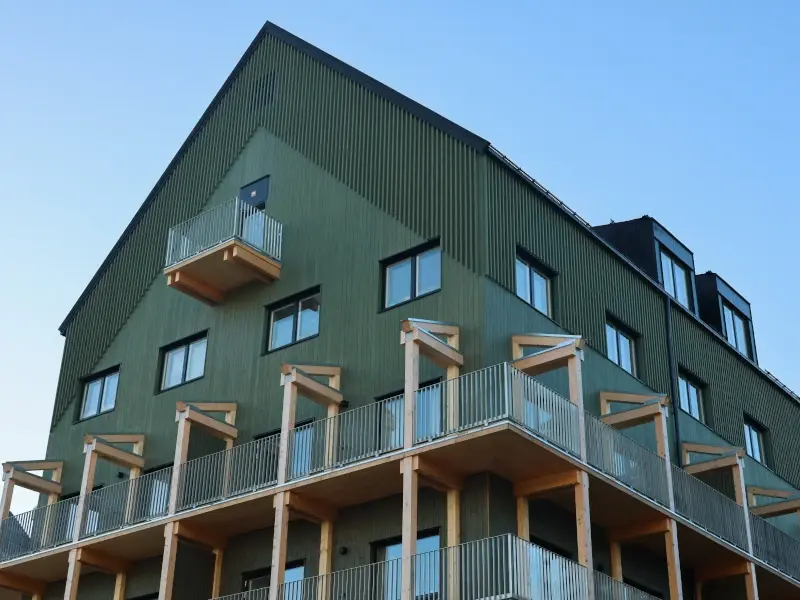
Therefore, any change that affects materials or construction should be reviewed and approved before it is implemented. This applies in particular to facades and other structures where the fire class is based on a documented system.
Asking the question in a timely manner is almost always easier than having to investigate the consequences afterward.
Common Pitfalls in Construction Projects
A few simple procedures reduce the risk of most deviations.
Many of the problems that arise in construction projects recur from project to project. Some of the most common are:
- Materials are replaced without checking the documentation
- FoA is not inspected prior to installation
- The wrong use class is being used for the current environment
- Documentation is missing during technical consultations
- Deliveries are not labeled correctly
- Changes are not communicated between the designer, contractor, and supplier
- System solutions are combined with components that are not included in the test
With clear procedures and a simple check before production begins, most of these problems can be avoided.
Build It Right from the Start
A well-thought-out approach leads to more reliable projects and more satisfied clients.
A successful construction project is not just about meeting regulatory requirements. It’s also about delivering a building where quality, safety, and documentation maintain the same high standard throughout the entire process.
When the right materials are combined with the right documentation and installed according to the designed solution, the risk of delays, additional work, and costly renovations is reduced. At the same time, communication with the supervisor, inspector, and client becomes significantly easier.
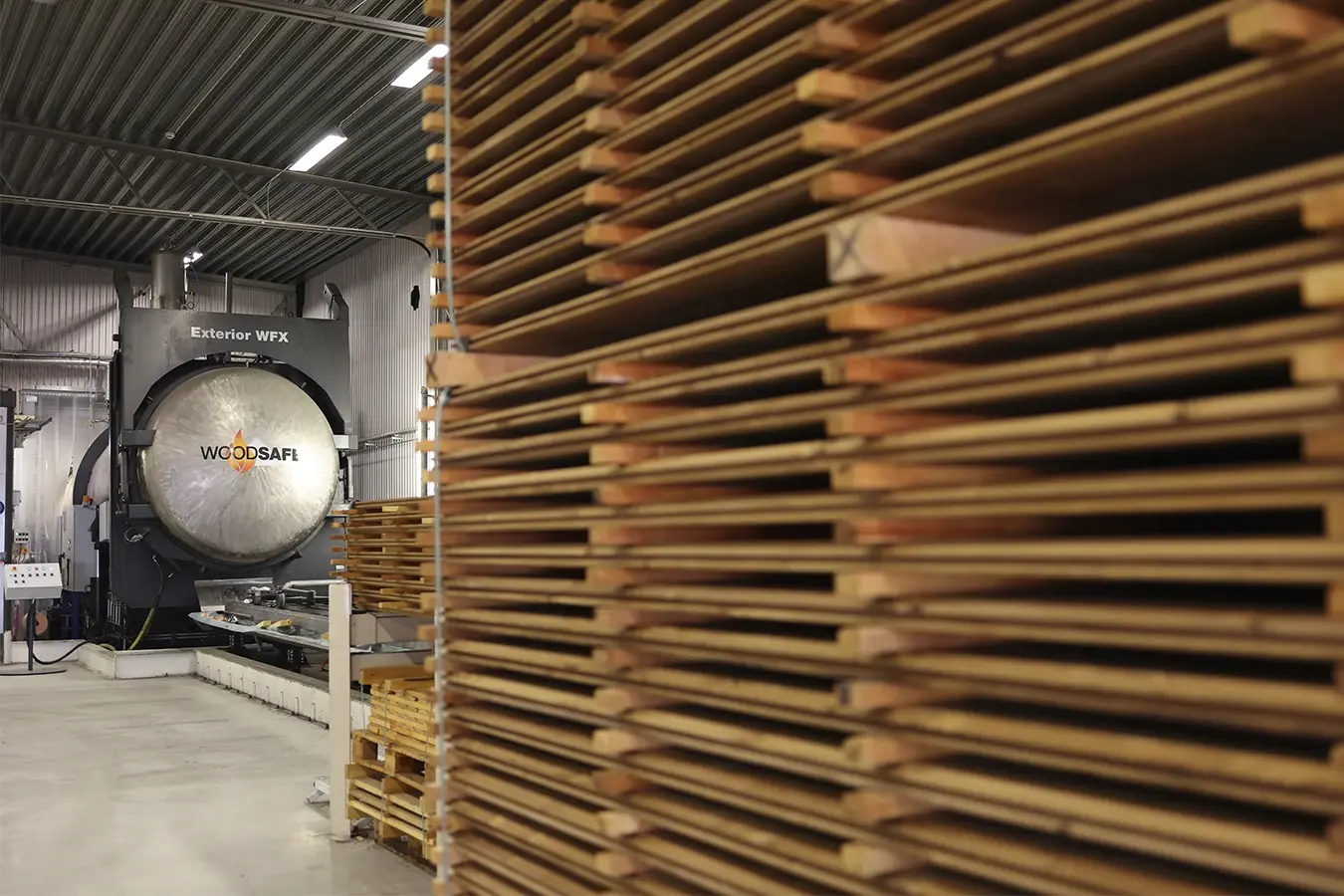
Woodsafe’s role is to provide a documented and quality-assured impregnation process, as well as the technical documentation needed for the contractor to carry out the project with confidence. This creates better conditions for efficient construction and a final result that stands the test of time—both technically and legally.